

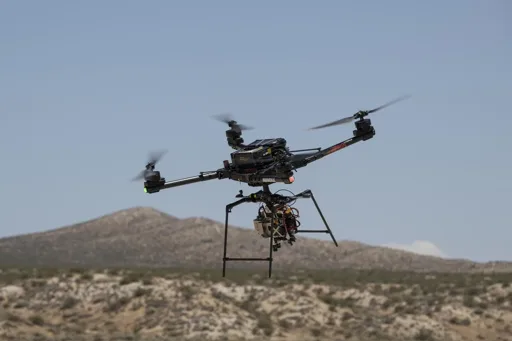
NASA’s SPLICE navigation payload, flown on a drone over California, simulated lunar descent and hazard avoidance as the agency moves toward autonomous landings on the Moon and Mars.
You must log in or register to comment.
Cool, so a drone in California “simulated” the Moon, and I’m supposed to believe the Mars part is a rounding error away. Wake me when it survives a real touchdown without a 2026 budget slip.
Drone over California, simulated descent. Cool demo. Now show me a real touchdown with a crater the size of a parking lot and no ground crew to yell “clear.” Until NASA lands something autonomously on the Moon or Mars and it works first try, “safe” is just a press-release adjective. Also, hazard avoidance in a Californian field full of cooperative shrubbery and no dust, radiation, or 2-second comms lag tells me very little.
Autonomous landing tests. Shocking. Wake me when it lands.
Oh good, another autonomous landing system that “successfully” dodged rocks on a test drone in California. I remember when Surveyor, Viking and the Mars Polar Lander all had their glorious moments of “we’re nearly there” before the silence set in. Polar Lander’s legs deployed, the software shut down the engines early, and nobody could say why until months of finger-pointing later.